Saturday, April 12, 2014

Worth

 From Luke 15:19. What am I worthy for? What am I suited for? What is my purpose? Why am I even here? Am I only valuable for my talents, my beliefs, or my performance? Or is there something more basic that gives me value? Is it merely the relationship itself? I know you have heard this before, but listen again, and listen carefully. You can know you are valuable because God made/created you and provided for you everything you need. You were not made valuable because of creation and because of the cross. You were valuable to God and that is why He created you and saved you. His creative energies and his salvation energy revealed His heart toward us. It shows us what He gives Himself to, what he invests in.

He could have been content to create more universes, more trees, more gardens, more seas, or more earthworms, but late on the 6th day He decided to create people, two to be exact with the capacity and natural desire to make more people. Before He created them He made plans to provide for them, body, soul and spirit. He anticipated their needs-our needs, even the need for a savior. His provision was at great personal sacrifice. It involved an elaborate plan spanning thousands of human years which was filled with great frustration. He also chose to coordinate His plan with human counterparts. Since these humans were given free will they often did not cooperate with His plan. He selected the dearest person to Him, His Son to carry out that plan by dying an excruciating death. Why? To provide for us our deepest needs.

From what I read God's focus has always been on us and how He could make fellowship with Himself possible. If the plan could have been simpler I believe God would have made it so. I have to trust that God designed everything in such a way that there would be the purest and most authentic outcome, a true love relationship. Yet we question our worthiness and value, and whether God simply wants us to be sons and daughters, and not hired hands. One of the greatest hindrances to wholeness is our disbelief that we could be THAT valuable to God.

Monday, April 7, 2014

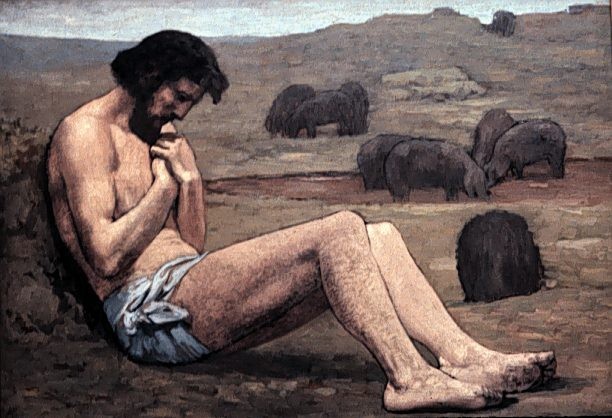
Coming to Yourself

"When he came to his senses...." (Lk.15:17). Literally "but to himself coming." What does that mean? It is a sober place. It is a place of serious reflection It is a place of resolve and decision. Often people live for a long time in a place of self-justification or regret or denial or pain and victimization or self-doubt or fear or complacency. It is a place where people get stuck in terrible situations, cycles of abuse, cycles of addiction, cycles of cynicism, and cycles of anger. "Coming to one's self" is a place to break the cycle and to get on a new path. It is a place of repentance and redemption and transformation. It is a place of hope and new beginnings. It is the fork in the road and the first step to a new, different, and better life. It is freeing and energy-giving. It is bold and daring and risky. You have to get up and get honest. It is a place of seeing and hearing again. It the point when we realize we are trapped but the door to the cell is not locked. The jailer left the key within reach. The angel shows up and gives us strength to walk out.

Sin, poor decisions, taking the wrong turn, doing something stupid leads us into lostness and despair and folly. We wake up for 100 mornings knowing we are in the wrong place but not having the will that day to make a decision. Then when we do, we play a tape and loop it a 1000 times to drown out the choice. It is easier to stay than to go but it is harder and harder every day to stay.

Coming to ourselves means to return to our design and purpose. It means that we know we were created good and for a reason. We have to claw our way back to that reason and hold on like a newborn at her mother's breast. We have to trust that God will meet us at the point of our true self. He will be there to take our hand and to guide us out as long as it takes. In fact He is there before we decide to escape, waiting for us to arrive. So what are you waiting for? Arise and be baptized, washing away your sins, calling on the name of the Lord.! (Acts 22:16)

Thursday, March 20, 2014

Salt Life vs His Life

We are in Luke 14:34. Good salt is effective salt. It has properties which accomplish its intended purpose. . There is a great book called The History of Salt that traces the role salt has played in the history of the world. It is considerable and very interesting. So what would cause salt to lose its saltiness or to become tasteless? The word for tasteless in the text is moranio. Do you see "moron" in this word? It means to make insipid, to make to become a simpleton, become a fool, make foolish, and to lose savor. It is a change in quality and effectiveness.
 
Salt is a very stable compound of the elements sodium and chlorine. They share an electron, and seem to have a very happy marriage bond. Salt exists in crystal form meaning the grains stick together providing more effectiveness and saltiness. But when the salt is put into water the crystals tend to separate, and the individual crystals become diluted. So it is dilution that would cause the salt to lose its saltiness or taste.
 
In Jesus' context here salt stands for the discipleship bond. Just as sodium and chlorine bond to form salt (or individual salt grains bond to other salt grains to form a crystal), the disciple and Jesus bond to form a healthy, effective relationship which accomplishes the purposes of discipleship. The bond is very stable but when diluted by 1) stronger relationships, even family (14:26); 2) even by one's own self-preservation (14:26); by putting our cross down and failing to follow Jesus (14:27); or 4) allowing possessions to distract us, it loses its saltiness. So if we categorize these four we have dilution by 1) Earthly relationships; 2) Self-preservation; 3) Trackless living; 4) Distractions. These four cause tasteless living. People who encounter Christians diluted by these things will be impressed by the salt of Jesus. They taste Jesus through us. Maintaining taste is essential to living an effective Christian life.

Tuesday, March 18, 2014

Rethinking An Ilustration

This is from Luke 14:31-32. Jesus gives an illustration of a king over 10,000 men going to battle against a king with 20,000 men. What does the first king do before he sets out into the fray? 1) He sits down; 2) takes counsel; 3) then he either fights or sends a delegation asking for terms of peace. Rushing into a battle you cannot win is foolish, even suicidal. Or is it brave to believe you can overcome the odds-we do celebrate this daily.
 
So is Jesus suggesting the smaller army should go into battle bravely and fight harder than the other king and his larger army? There are many stories in the Bible where this kind of action was supported by God, e.g. David and Goliath and Gideon's army come to mind. Or is Jesus suggesting that we play it safe and ask for a peace treaty? Maybe He is not suggesting either option but merely suggesting that before you make a big decision like taking a 10,000 man army up against a 20,000 man army you should first sit down, get counsel, and decide if you can finish the fight once you start it. Maybe Jesus is suggesting that the smaller army must decide if they are prepared to die for what they are fighting for.
 
I have always thought Jesus was saying they should not fight and make a truce. But, now I am not so sure. He could be saying the opposite. Remember this section is about starting and fishing the job you begin. But, for us Christians today, don't the odds seem against us in this life-the challenges are great! And we should soberly consider the nature of the battle and how difficult it will be, but we should not shrink back in the day of battle. We are overcomers, not quitters, and greater is the one in us than in the world. We have a strength and power they do not have. In spiritual reality the 10,000 man army is greater than the 20,000 man army, If the 20,000 man army is led by Satan we must not seek terms of peace with him. We must fight even when it seems we are outnumbered. Think about it.

Thursday, March 13, 2014

Bearing a Cross

 The Text is Luke 14:27. So what does bear a cross mean? Pick it up and walk. We get it from one place to another so that an execution can take place, ours. You don't carry it to show off or to parade or to impress or to demonstrate. You carry it to die. A cross had one purpose, i.e. to kill people. By following Jesus who ended up on Golgotha so we end up there. It is our destiny to die-to be consumed by death-death is swallowed up in victory. But we must walk the Via Delorosa. It starts by picking it up, touching that vile instrument of suffering and pain. Why would you? What would make anyone shoulder it? But, He had to-why would we? Do we have to? Perhaps if we do, we have to. No one would unless they had to-I must! But it is heavy and I am not sure I can carry it all the way. What if I stumble? He did. What if I need help? He did. There is no shame. There is only victory in death-death to self. But, people will stare and some might rejoice to see my death, and others might feel sorry for me. What am I to do? Trudge on. Finish. Climb. Get up. Drag it. Push it. Pull it. Do what you have to do to follow Him. Shed blood. Drop sweat. Cry. But, don't stop. There is victory in death. There is resurrection and eternal life on the other side. Rest will come, renewal of strength will be given. But for now-Bear it. This is discipleship. This is our school. This is learning. This is following Him. No turning back. I have decided.
 

Thursday, January 2, 2014

Whether Visible or Invisible

 The two parables of Luke 13:18-21 are simple. Contextually they follow the healing of the "bent over" woman in the previous verses. The connection might not be so clear. In one parable mustard seed is thrown into a garden. Though small, the seed is visible and exposed. In the second parable the leaven is hidden in three pecks of meal, more than a bushel of meal. One lies seen on the ground, and the other is hidden within the meal. Both have potential to influence and affect their respective environments.
 
However, the seed on the ground is vulnerable to the very birds who could benefit most by leaving the seed alone. A bird could eat the mustard seed lying on the ground and forfeit future branches and future seed that this seed would produce. How often do we eat our seed instead of investing it for future benefit? The bird who eats the seed often destroys it. The synagogue ruler did not want the practice of Jesus, i.e. healing on the Sabbath, to become the norm. He did not want this mustard seed of example to turn into a tree. So he sought to devour the seed and to render Jesus' example null and void. It was too late. The vulnerable seed on the ground was already germinating in the hearts of the crowd. They were already beginning to nest in its branches. It is also true that even when birds do devour plants, they often inadvertently spread the seeds through their droppings. Acts 8 is a good example of how those who tried to destroy the faith only spread it, and the very one who tried the most to stop its spread was the very one God used to spread it throughout the Gentile world. Ironic isn't it?
 
Now the leaven is more subtle. It is not visible. It is hidden in the meal. It will so integrate with the meal that you will not be able to tell one from the other. This is the secret workings of the kingdom. We often do not know what effect something has until years later. We don't see how a word hidden in some one's heart is growing and what it might produce. The evangelism of Acts 2 which resulted in 3000 baptisms was outward and dramatic. The teaching of Eunice and Lois hidden in the heart of young Timothy was more subtle. Which had more kingdom effect, Peter's one sermon or Timothy's life?
 
The lesson is clear. Both visible and invisible means are used by God to further the kingdom. A bold act may produce dramatic results. A secret kindness may also. We know the reaction of the synagogue ruler and the healed woman, but was there a little child there in the crowd that day who saw, heard, and never forgot, and who grew up to change the world more than all the others? God knows. For us, we must never stop throwing seed into the garden and hiding yeast in the meal.

Wednesday, January 1, 2014

Bent Over

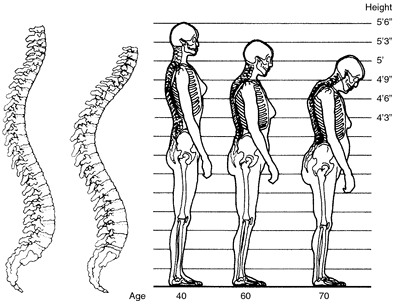
 Eighteen years is the span of time from birth to high school graduation. That is a long time to be bent over. This daughter of Abraham (Luke 13) suffered and cried for a very long time. In my ministry some of my greatest sympathy is reserved for folks with back problems. When my back hurts I get an adjustment or two and I am okay, but many find little relief day in a day out. There is no way to lie down that does not hurt. They can't stand long without hurting. When I think of "bent over" I think of my grandmother Hattie Myers from Kentucky. She had a hump on her back. I never knew it to slow her down, but as I see it through adult eyes today I know she must have been in great pain most of the time. Yet she quilted, washed clothes in a ringer washer out back, made a garden without a tractor, kept chickens, mended the roof with grandpa (this was the only time I saw her in pants, overalls to be exact), and upholstered furniture. She sat humped over a sowing machine for hours at a time.

The woman of Luke 13 was doing what she always did on the Sabbath, attending synagogue. Did she know there was a visiting Rabbi that day? Would it have mattered? She was going to "church" because that is what you do on Saturday (or Sunday). Jesus was into His lesson. We are told what the topic was that day. This is when he spies this hunched over woman in the crowd. At that precise moment what crossed over the mind of the Savior of the world? What was the "mind of Christ" as He looked out from the pulpit? Was he thinking of agendas, schedules, completing His message, what others would think, the order of worship, or getting out on time? Here is what I see.

Jesus thought: "I am not too busy with teaching to put into practice what I am teaching." Which is more important, teaching or putting the teaching into practice? Well both are important, but if we are constantly teaching and never obeying, what good is that?

Jesus thought: "I feel compassion for that dear old lady in the second row who cannot straighten up." Jesus was not so into His message that He could not see the pain of another and feel something.

Jesus thought: "I know why this woman is bent over like that, and I know what to do about it." Jesus saw more than curvature of the spine. He saw spiritual affliction caused by a spirit directed by Satan himself. Jesus saw a battlefield. Others saw an old woman.

Jesus thought: "I will heal her now and deal with objections later." Jesus knew what day it was and He knew what kind of reaction He would get from the Jewish leaders, but this did not stop Him from doing the right thing. Jesus cared not for what others thought.

Jesus thought: "This is a teachable and worshipful moment." Jesus stopped His teaching to create a teachable moment that neutralized the evil powers in the spirit realm, enraged the spiritual opposition of the Jewish leaders, produced worship led by a woman, and caused an entire crowd to rejoice.

A woman had been humiliated by Satan. A synagogue ruler was humiliated by Jesus. A woman was freed by Jesus. A synagogue ruler was indignant and enslaved by his own pride. A woman stood up straight and walked out of that synagogue. A ruler was bent out of shape and walked out bent over.