Thursday, January 2, 2014

Whether Visible or Invisible

 The two parables of Luke 13:18-21 are simple. Contextually they follow the healing of the "bent over" woman in the previous verses. The connection might not be so clear. In one parable mustard seed is thrown into a garden. Though small, the seed is visible and exposed. In the second parable the leaven is hidden in three pecks of meal, more than a bushel of meal. One lies seen on the ground, and the other is hidden within the meal. Both have potential to influence and affect their respective environments.
 
However, the seed on the ground is vulnerable to the very birds who could benefit most by leaving the seed alone. A bird could eat the mustard seed lying on the ground and forfeit future branches and future seed that this seed would produce. How often do we eat our seed instead of investing it for future benefit? The bird who eats the seed often destroys it. The synagogue ruler did not want the practice of Jesus, i.e. healing on the Sabbath, to become the norm. He did not want this mustard seed of example to turn into a tree. So he sought to devour the seed and to render Jesus' example null and void. It was too late. The vulnerable seed on the ground was already germinating in the hearts of the crowd. They were already beginning to nest in its branches. It is also true that even when birds do devour plants, they often inadvertently spread the seeds through their droppings. Acts 8 is a good example of how those who tried to destroy the faith only spread it, and the very one who tried the most to stop its spread was the very one God used to spread it throughout the Gentile world. Ironic isn't it?
 
Now the leaven is more subtle. It is not visible. It is hidden in the meal. It will so integrate with the meal that you will not be able to tell one from the other. This is the secret workings of the kingdom. We often do not know what effect something has until years later. We don't see how a word hidden in some one's heart is growing and what it might produce. The evangelism of Acts 2 which resulted in 3000 baptisms was outward and dramatic. The teaching of Eunice and Lois hidden in the heart of young Timothy was more subtle. Which had more kingdom effect, Peter's one sermon or Timothy's life?
 
The lesson is clear. Both visible and invisible means are used by God to further the kingdom. A bold act may produce dramatic results. A secret kindness may also. We know the reaction of the synagogue ruler and the healed woman, but was there a little child there in the crowd that day who saw, heard, and never forgot, and who grew up to change the world more than all the others? God knows. For us, we must never stop throwing seed into the garden and hiding yeast in the meal.

Wednesday, January 1, 2014

Bent Over

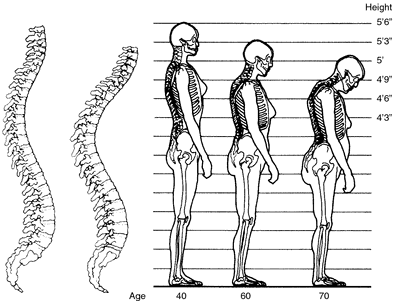
 Eighteen years is the span of time from birth to high school graduation. That is a long time to be bent over. This daughter of Abraham (Luke 13) suffered and cried for a very long time. In my ministry some of my greatest sympathy is reserved for folks with back problems. When my back hurts I get an adjustment or two and I am okay, but many find little relief day in a day out. There is no way to lie down that does not hurt. They can't stand long without hurting. When I think of "bent over" I think of my grandmother Hattie Myers from Kentucky. She had a hump on her back. I never knew it to slow her down, but as I see it through adult eyes today I know she must have been in great pain most of the time. Yet she quilted, washed clothes in a ringer washer out back, made a garden without a tractor, kept chickens, mended the roof with grandpa (this was the only time I saw her in pants, overalls to be exact), and upholstered furniture. She sat humped over a sowing machine for hours at a time.

The woman of Luke 13 was doing what she always did on the Sabbath, attending synagogue. Did she know there was a visiting Rabbi that day? Would it have mattered? She was going to "church" because that is what you do on Saturday (or Sunday). Jesus was into His lesson. We are told what the topic was that day. This is when he spies this hunched over woman in the crowd. At that precise moment what crossed over the mind of the Savior of the world? What was the "mind of Christ" as He looked out from the pulpit? Was he thinking of agendas, schedules, completing His message, what others would think, the order of worship, or getting out on time? Here is what I see.

Jesus thought: "I am not too busy with teaching to put into practice what I am teaching." Which is more important, teaching or putting the teaching into practice? Well both are important, but if we are constantly teaching and never obeying, what good is that?

Jesus thought: "I feel compassion for that dear old lady in the second row who cannot straighten up." Jesus was not so into His message that He could not see the pain of another and feel something.

Jesus thought: "I know why this woman is bent over like that, and I know what to do about it." Jesus saw more than curvature of the spine. He saw spiritual affliction caused by a spirit directed by Satan himself. Jesus saw a battlefield. Others saw an old woman.

Jesus thought: "I will heal her now and deal with objections later." Jesus knew what day it was and He knew what kind of reaction He would get from the Jewish leaders, but this did not stop Him from doing the right thing. Jesus cared not for what others thought.

Jesus thought: "This is a teachable and worshipful moment." Jesus stopped His teaching to create a teachable moment that neutralized the evil powers in the spirit realm, enraged the spiritual opposition of the Jewish leaders, produced worship led by a woman, and caused an entire crowd to rejoice.

A woman had been humiliated by Satan. A synagogue ruler was humiliated by Jesus. A woman was freed by Jesus. A synagogue ruler was indignant and enslaved by his own pride. A woman stood up straight and walked out of that synagogue. A ruler was bent out of shape and walked out bent over.

Tuesday, November 26, 2013

Reaction

Ever heard the expression "stuck in his craw?" The "craw" is the crop of a bird that helps digest food. When food gets stuck there it can kill the bird. It is like a hairball for a cat or a bone in one's throat. It chokes. It becomes all you think about. It cuts off your air and makes you feel like you are going to die, and you may. The words and woes of Jesus in Luke 11 got stuck in the craw of the scribes and the Pharisees. Remember the lawyers said, "Teacher, when you say this, You insult us too." (11:45) Words taken as insults stick in the craw. It is kind of strange to think that anything Jesus, the man of love, would say would stick in some one's craw and cause such anguish. Shouldn't we avoid causing such distress at all costs? I guess not, since Jesus is our example. There are times when we need to say things that others will not be able to swallow very well, and it may cause them to choke on our words. We, of course, do not intend for them to choke, but that might be the consequences. So what did these religious leaders do in response?
First, they became "very hostile" toward Jesus. The word used here can be translated "entangled" and has the idea of being trapped or ensnared. It is used in Galatians 5:1 to describe being entangled in a yoke of slavery, in this case trying to be justified by law-keeping. When we are fixated on an offense, swallowing it over and over again, it becomes what eats on us instead of us eating on it. It causes the break down of relationship. These leaders saw Jesus as an irritant that must be flushed out of their eye. He was a royal bother. He was making life hard for them. Just as John the Baptist was a pain in the you know where to Herod, so Jesus is a pain to those who do not want to face themselves. Jesus is right in John 3 when he says people do not come into the light because their deeds are evil.

Second, out of this hostility they question Him closely on many subjects. They are getting much more specific and targeted in their questions. It reminds me of Senate/Congressional Hearings where the law-maker is questioning the person at the table about some matter. Their questions are designed to both preach and to catch someone in an admission of guilt, instead of seeking truth and information, and letting it reveal what it will. Questions are asked and the questionee is unable to get a full sentence out in response before being cut off and told they are unresponsive. It is clear in such cases the questioner is not interested in hearing the answer as their minds are made up. So is the case here. These leaders' minds are made up. Jesus has to be stopped.

Third, they begin to plot against Jesus. Literally they are "laying in wait" to ambush Him. Acts 23:16 tells of a literal plot to ambush Paul. Psa.2:1 asks the question: "Why do the nations rage and the peoples plot in vain?" Psa.35:4 says, "May those who seek my life be disregarded and put to shame; may those who plot my ruin be turned back in dismay. Proverbs 12:20 says deceit is in the mouths of those who plot evil. Think how ridiculous it is to think that mere men could devise a plot to bring down God!

Fourth, they are trying to catch Him in something He might say that is contradictory or false. The mouth God sent to teach us the way of life is now being listened to, not to learn about life, but to bring about His death. Irony of irony. If you capture a person in their words you capture the person. They sought inconsistency and half-truths. Did they read Him his Miranda rights: "Anything you say can be used against you in a court of law..."  In this text Luke gives us a good list to look out for when we say something that sticks in some one's craw. So watch out. If it happened to Him, it can happen to you.

Wednesday, November 20, 2013

Lawyer Woe #3

  Luke 11:52, "Woe to you lawyers! For you have taken away the key of knowledge; you did not enter in yourselves, and those who were entering in you hindered." Those who hold the keys have the power. When people want to get in, even need to get in, and cannot because the person with the key will not open the door, or will not give them the key so they can open the door, the condemnation is heavy. Imagine you are in a room and the room is on fire. The door to the room is locked, and there is one person in the room who has the key to the door. This person will not unlock the door and will not give you the key. Imagine the panic. Imagine the anger. Imagine the chaos of such a scene. Essentially Jesus came to earth from heaven to bring the key that would unlock the doors of sin, fear, anxiety, addiction, and hopelessness. People are trapped in these horrible rooms which are on fire. On the other side of the door is the glorious kingdom of heaven, a kingdom of purity, security, peace, freedom, and hope. People know in their hearts that it exists and they long to live there, but they are trapped behind a locked door. They hear the Savior calling to them from the other side, and they could easily walk through if it weren't for the person holding the key.
 
Sadly the lawyers would not enter the kingdom themselves and they prevented those who would enter from doing so. Jesus proclaims a serious condemnation on them. How could someone be so callous? So what is the key of knowledge? Jesus associates knowledge of the Father and the Son with eternal life. The kingdom of God is the kingdom which has as its quality of life, eternal life. The kingdoms of this world cannot offer this quality of life. Knowing Jesus and the Father is essential to our experiencing life indeed. The true and abundant life of the kingdom is dependent on knowing the Father and the Son. This is what Jesus came to do, to reveal to us the Father (John 14). Our highest calling is to know Jesus, understand His mind, unlock all the hidden treasures of wisdom and knowledge found in Him (Col.2:1ff).
 
The lawyers did everything they could to keep people from believing in Jesus. They devised clever arguments and twisted Scripture and told lies to try to persuade people that Jesus was a false Messiah. They tried to trick Him to discredit Him. They spread rumors and organized mobs to turn public opinion away from Jesus. Jesus Himself is the key of knowledge. He unlocks the secrets of the kingdom. Hearing Him and Knowing Him is the key to all understanding. When we make it difficult for people to know Jesus by 1) not telling them about Him; 2) setting a bad example while saying we follow Him; 3) creating man-made doctrines and systems that obscure Him; 4) failing to know Him ourselves because we are too busy to seek the mind of Christ, then we too take away the key of knowledge. This is a serious matter, and one we should give serious consideration to.

Monday, November 18, 2013

Lawyer Woe #2

 See Luke 11:47-51. In a couple of weeks I plan to stand before the graves of my father and mother in a small cemetery in Dasher, GA. I hope to honor them by taking the time to go there and spend a few minutes. Last week I said a prayer before the mobile Vietnam memorial and thought of the 58,000 men and women listed there. Here is the crux of Jesus' woe. There is something wrong with outwardly honoring the dead, holding them up as worthy of honor for how they lived and died, and then not following the principles by which they lived and died. The lawyers decorated the tombs of the prophets, making a great show of their devotion to what these prophets stood for and what they preached, while all the while not living their lives according to what the prophets said. (It would  be worth your while to read a sermon by John Nelson Murdock delivered on the 4th of July, 1858 entitled "Building the Tombs of the Prophets.")

These lawyers venerated the old Elijah but would not listen to the new Elijah, John the Baptist. They venerated the prophet Moses but would not listen to the one like Moses, even the Messiah Jesus (See Deut.18). Many love dead prophets but show little respect for live ones who tell them things they do not want to hear. Dead prophets can be tamed and entombed. Dead prophets can be quoted. Live ones are hard to tame and should be followed. Before we say that we would not do what they did, how would we treat the likes of John the Baptist if he came to preach at our church next Sunday? It is one thing to set him on a flannel graph board; it is still another to put him in the pulpit. The message of dead prophets can be reshaped. They can be kept in a book on a shelf, tucked away, ignored, neglected, and made irrelevant. Martin Luther King, Jr. was hated while alive, and today we have a national holiday in his honor. When we celebrate the Lord's Supper are we merely decorating His tomb, or are we listening and responding to the living Savior.

It is curious that Jesus says "For this reason the wisdom of God says..." (11:49) Not just "God said" but the "wisdom of God says." It reminds me of Luke 7:35 in a similar context. "Wisdom is proven right by her children." God was prophetically silent for 400 years, and then in the new age he began to send prophets and apostles to that generation. Why? One reason is so that He could hold them responsible for the blood of all the prophets. Their blood was going to come upon Jesus' generation, and within 40 years it did at the destruction of Jerusalem. From one end of the Jewish Bible to the other, from Abel to Zechariah (Gen.4:8 to 2 Chron.24:20,21) the indictments of all the murders of all the prophets, including the greatest Prophet, Jesus Himself was going to be brought to court with God Himself as the judge. The blood of these prophets cry out from the ground against them.

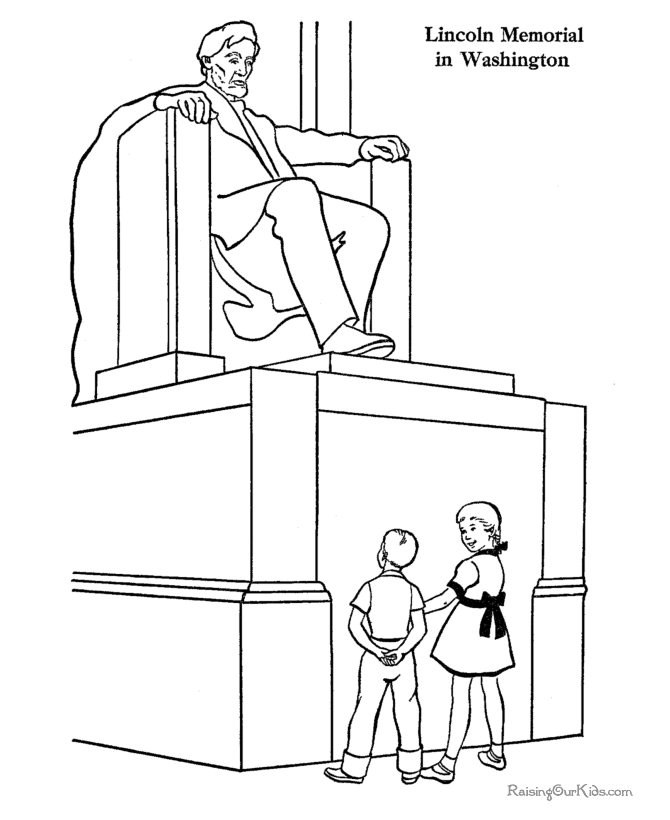
So how do we avoid such a woe? We must stop giving lip-service to those who have gone before, our parents and grandparents, our great moral and spiritual leaders, our heroes who died sacrificially, and our constitutional forefathers and begin to live out the truths and principles which guided their lives. More than this, we must not honor Jesus with our lips and our hearts be far from Him. We must not speak of how great He was. We must speak of how great He still is and how He is the most profound influence in our lives, the one we listen to each day for our faith and direction. Two children before the Lincoln memorial on a field trip; or two children who carry in their hearts the passion and character of Lincoln?

Thursday, November 14, 2013

Lawyer Woe #1:

We are still in Luke 11, verse 46. Jesus turns from the "woes" of the Pharisees to the "woes" of the lawyers. Admit it. We have a love/hate relationship with attorneys. They have been called a lot of names. But, it also is true that when we are in some civil or criminal trouble, they are within our top three list to call. I almost became an attorney. It was one of my three choices for a career or life profession (along with something in the music industry, and you know the other one). How different my life would have been if I had chosen this path. I can see how lawyers in applying the law to specific situations can lay heavy burdens on people. It is one thing for the law to create obligations; it is another for a faulty interpretation of the law to create an unwarranted obligation. Truly this becomes a burden.

Jesus says, "Woe to you lawyers as well! For you weigh men down with burdens hard to bear, while you yourselves will not even touch the burdens with one of your fingers." The burden here is like the cargo on a ship. Too much cargo can sink the ship especially in time of storm. Jesus uses this same word to describe his cargo in Matt.11:30 where he says that His yoke is easy and His burden is light. Paul tells us in Gal.6:5 to bear our own cargo or burdens. Burdens under which we groan are common to men who live in tent (2 Cor.5:4). John tells us that Jesus' commands are not burdensome (cargo) (I john 5:3). So how did these lawyers excessively burden people?

In today's governmental environment we often speak in terms of the constitution, the laws that derive from that constitution, and then the regulations that are involved in the carrying out of the laws. The further we get from the constitution the fewer the people who can affect the lives of the many. It takes a lot of folks to enact a constitution. It takes fewer to make laws. But, a much fewer number of bureaucrats can in a few minutes write policies and regulations that will affect millions and make life very difficult. This is what the lawyers did. They were the "regulators" of the religious life of the people. Constitutions, laws, and regulations should make living easier and doable. These should assist us in tackling the real burdens that are against us, the burdens of sin, fear, death, man-made rules, and our own destructive tendencies. These are burdens for which Jesus had to die. For us as humans to effectively undo the work of Christ by creating regulations that make living out the freedom Christ gives is simply wrong. Jesus did what He did to free us not to have men come along and weigh us down with new obligations which we cannot keep. Jesus did not come to make us spiritually successful just to have men come along and make it impossible to be successful. When a regulation undoes the intention of the constitution or a law, it is a bad regulation. Those who craft such regulations deserve a "woe."

Monday, November 11, 2013

Pharisee Woe #3

The third woe given by Jesus to the Pharisees of His day comes in Luke 11:44. "Woe to you! For you are like concealed tombs, and the people who walk over them are unaware of it." Certainly an interesting condemnation. I was always told when I was growing up not to step on a grave because it was a sign of disrespect. On recent visits to grave sites, I find that this thoughtfulness has gone the way of holding the doors for ladies, and saying "yes sir" and "yes mam." Occasionally you will hear of some construction project that will stumble upon a long-forgotten graveyard, and the project grinds to a halt out of respect for those buried there.

It seems that Jesus holds the Pharisees responsible for not marking their own graves well. This lack of adequate markers causes people to inadvertently walk over these graves. Sacred things and places need signage. It should be clear to all when we are in the presence of something great or hallowed. It is horrifying to see young people treat lightly monuments to fallen heroes, or places like Gettysburg where so many fell in battle, or gardens built in memory of some unfortunate child. There should be a reverence that accompanies such places. The National Cemetery outside of Sarasota cautions folks to be quiet when entering this place. Judges do not tolerate dress that is not fitting for a court of law or cell phones going off. When respect breaks down then the honor and solemnness of our institutions falls.

But, what of these Pharisees. They sat in Moses' seat (Matt.23:2). This is a place of honor and importance. Even if they placed themselves there without divine approval or endorsement, just being there creates a responsibility to properly mark their position, just as a grave should be properly marked. So what marks of the Pharisees were missing so as to cause people to walk over their graves without their knowledge. Perhaps a story in Acts will explain. In Acts 23 Paul was before the Sanhedrin, and as he spoke about living in all good conscience,the high priest Ananias commanded that Paul be struck on the mouth. Paul's response was to call him a white-washed wall and says that God will strike him for sitting in judgment of Paul based on the Law by having Paul struck. Paul was rebuked for this comment. Paul's response was that he was unaware that Ananias was the high priest. Now did Paul really not know he was the high priest? Of course Paul knew. But, Ananias' life did not properly mark him as a legitimate priest before God. Ananias was an unmarked grave, one that Paul had no way of seeing that he deserved respect. Ananias lacked spiritual and moral authority, and therefore no one could know he was a bon a fide high priest. Besides he had already been replaced by a real High Priest, Jesus Christ Himself. The Pharisees had forfeited any right to be respected by the people.

If people are going to represent God in positions of authority then there be some signs to mark their lives as being worthy of that respect. Otherwise folks may walk over sacred places and institutions. When our elected official or spiritual leaders do not live in integrity they cause people not to respect the office they hold, and the entire system is demeaned.